
The concept
What is water from air?
Even air that feels dry contains some water vapor. Under suitable conditions, cooling air below its dew point can cause some of that vapor to condense into liquid. The amount available depends on temperature and humidity; a device must move air, remove heat or use another capture method, then collect the water. This is a real category of technology, but the existence of atmospheric moisture does not establish what any particular homemade or commercial design can deliver.
Technology overview
What is an atmospheric water generator?
An atmospheric water generator, sometimes called an air-to-water generator or air water generator, is equipment designed to capture moisture from ambient air. Some systems cool air to condense vapor; others use materials that absorb water and then release it during a regeneration step. The approaches have different equipment, energy, climate and treatment requirements. A device advertised as a “water generator for home” should be evaluated by measured output under specified conditions, energy use, water quality controls and upkeep.
General research and U.S. Environmental Protection Agency materials discuss atmospheric water generation as one possible water source. They do not validate the output of this specific product or show that a digital guide itself produces drinking water.
How it works
Humidity, dew point and condensation
Relative humidity describes how much vapor is present compared with the amount air could hold at its current temperature. The dew point is the temperature at which that air becomes saturated; if a surface cools below that point, moisture may condense on it. An active cooling design typically needs a fan and refrigeration or another heat-removal mechanism. It also needs surfaces and a container that can be cleaned, and a plan for treating and storing collected water.
Atmospheric water harvesting depends on climate and design. Warm, humid air may yield more water for a given airflow than cooler or drier air, while the system still consumes energy. Water collected from air is not automatically safe to drink merely because it condensed from vapor.
At home
Can you generate water from air at home?
Technically, condensation can occur in a home environment, and purpose-built atmospheric water generators are sold for some applications. Whether a particular home setup is practical depends on local climate, relative humidity, electricity access, capacity, equipment cost, maintenance and the need for safe water treatment. A small amount of condensate seen on an appliance is not proof that a household-scale supply can be produced economically or safely.
For an air-to-water generator guide, ask for independently measured liters per day across several humidity and temperature conditions, watts consumed, cleaning schedule and tested water quality. Claims without test conditions are hard to compare.
Broader choices
Off-grid water systems and alternative sources
An off-grid water system may combine more than one approach. Stored drinking water is available immediately but finite. Rainwater collection depends on weather, roof materials, storage and local rules. A well may require geology, equipment and permits. Atmospheric water generation depends on ambient conditions and a power source. Which mix is reasonable varies by location and intended use.
Predictable short-term quantity if stocked and maintained; storage space and rotation matter.
Site-dependent sources that need collection infrastructure, quality testing and sometimes permits.
Potentially useful in suitable climates with appropriate energy and treatment; output must be measured.
A self sufficient water system is a plan for supply, storage, treatment and maintenance, not just a single device.
Practical planning
Emergency water preparedness
For short disruptions, stored water offers an immediately available starting point. U.S. Ready.gov recommends storing at least one gallon per person per day for several days for drinking and sanitation; needs vary by household and climate. Consider a backup source and a suitable treatment method, and check local public-health advice during a contamination event. If power can fail, an electricity-dependent water system should not be the only emergency supply.
Write down how much water your household uses, where safe reserves are kept, and how they can be replenished. That planning has value even if you never buy an alternative water guide.
Independent product review
What is Smart Water Box?
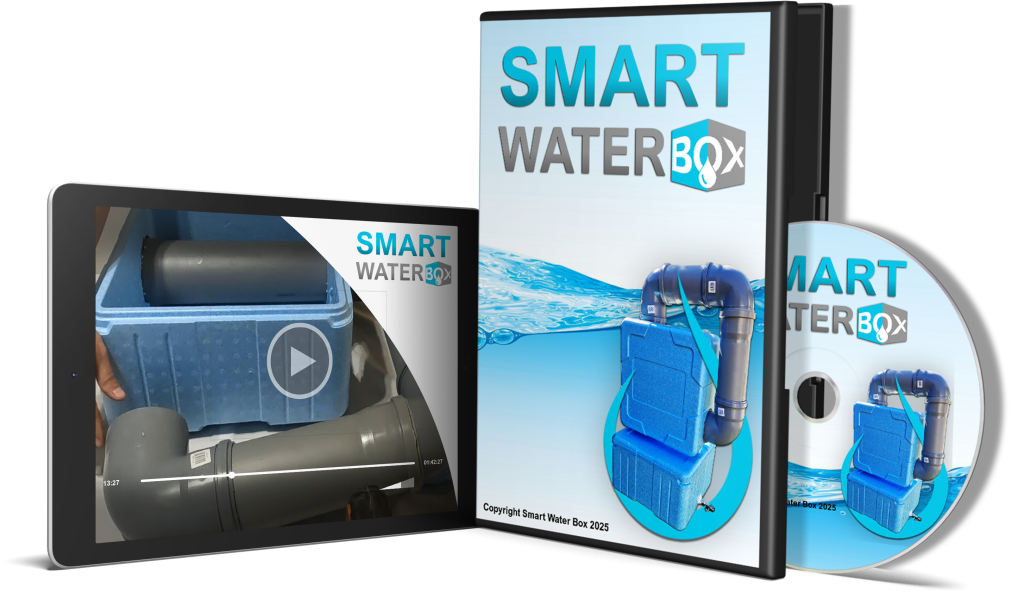
Smart Water Box is presented through a vendor-provided cover as an information offer about a water-from-air concept. The cover depicts a case, disc and tablet screen; those are marketing mockups, not evidence that a physical appliance is shipped. Hotsia Product Reviews did not create or test the offer and is not its official seller.
What does the offer include?
The imagery suggests instructional media, but the exact customer package, file format, components, support, delivery method, current price and refund terms have not been independently verified for this review. Check the current seller page for a clear inventory of what is included. Do not assume that an assembled water generator, materials or a drinking-water certification are part of the purchase.
How the concept is presented
The vendor markets the idea of obtaining water from air. That concept is technically possible in general, but the vendor's presentation is not a product-specific performance study. We have not verified this offer's output, efficiency, construction cost, operating expense or water quality.
Performance questions
Water output and energy requirements
A reported amount of water per day makes sense only alongside humidity, temperature, airflow, cooling capacity, test duration and electrical consumption. Dew point and system design determine how much condensation is physically achievable. A claim made for one climate cannot simply be carried over to another home. Ask for repeatable measurements under conditions close to your own and for an estimate of electricity used per liter.
Atmospheric water collection has an energy tradeoff. Even when moisture is naturally present in air, moving air, cooling it or regenerating an absorbent material generally requires power. Compare the complete operating cost and maintenance with other available water sources.
Water quality
Can collected water be used for drinking?
Do not assume that condensate is safe to drink. The collection surfaces, air, filters, storage vessel and microbial growth can affect quality. An EPA evaluation of an atmospheric water system discussed treatment and microbial stability, which illustrates why design-specific testing matters. Appropriate filtration, disinfection, sanitation, storage and local water testing should be considered before anyone relies on a collected supply for drinking.
This review has no independent water-quality results for Smart Water Box. A drawing, demonstration or guide does not establish potable output. For a home drinking-water setup, consult applicable local standards and qualified water professionals.
Compare options
Smart Water Box vs. other water solutions
Commercial atmospheric water generator: a finished appliance can be evaluated by its specifications, measured operating conditions, certifications, maintenance and warranty. This offer: the vendor cover suggests instructional material, while exact deliverables and system performance remain to be confirmed. A guide should not be compared to a working appliance as if they were equivalent.
Rainwater collection: collects precipitation from a catchment area and relies on local rainfall, storage and treatment. Emergency water storage: gives an immediate reserve without waiting for weather or powered equipment, but has a finite capacity. Water-from-air systems depend on humidity and energy instead. A resilient plan may combine compatible options.
Reader fit
Who might be interested, and what to consider?
Readers exploring off-grid living, atmospheric water harvesting, alternative water sources or water preparedness may want to examine this guide as one information source. Anyone needing a dependable near-term drinking-water supply should first use established storage, treatment and locally appropriate options rather than relying on untested output from a proposed build.
- Climate: compare local humidity and temperature to any vendor test conditions.
- Electricity: determine the source, energy consumption and what happens during an outage.
- Costs: include components, operation, maintenance, water testing and any required professional work.
- Skills and rules: evaluate technical ability, electrical safety, plumbing and local regulations.
- Quality: ask what treatment and verified water-quality evidence supports the intended use.
- Offer terms: verify deliverables, price and refund conditions on the current vendor page.
Buyer checklist
Questions to ask before purchasing
- Am I purchasing instructions, a finished device, or both?
- What exactly is delivered, and when is it available?
- What measured output is documented at specified temperature and humidity?
- How much electricity and what materials are needed for each liter produced?
- What cleaning, filtration, treatment and testing are required?
- What is the current price and what written refund or support terms apply?
- How will my household obtain safe water if this system is unavailable?
Common questions
Frequently asked questions
What is an atmospheric water generator?
A system designed to collect moisture from ambient air, often through cooling and condensation or moisture-absorbing materials.
Can you really get water from air?
Yes, under suitable physical conditions. Actual quantity, energy use and water quality depend on the system and environment.
How does an air-to-water generator work?
Some cool humid air below its dew point and collect condensation; other designs absorb moisture and release it later. Treatment and storage remain separate steps.
Does humidity affect production?
Yes. Temperature, humidity and the resulting dew point affect how much moisture can be collected.
How much energy does atmospheric water generation use?
It varies by design and conditions. Ask for measured electricity use per liter at realistic humidity and temperature.
Can water collected from air be used for drinking without treatment?
Do not assume so. Collection, treatment, storage and testing determine suitability for drinking.
Can you generate water from air at home?
Equipment can collect atmospheric moisture, but practical household output and safety depend on climate, power, design and upkeep.
What is an off-grid water system?
It is a plan for sourcing, storing and treating water without routine reliance on a centralized supply; it may use several methods.
What should I check before choosing an alternative source?
Look at climate, water demand, power, upkeep, legal requirements and tested water quality.
Does Smart Water Box ship a working machine?
We cannot confirm that. The vendor cover appears to depict instructional media. Check the current offer for precise deliverables.
Have you tested the Smart Water Box design?
No. We have not purchased the offer, built a device, measured output or tested water quality.
Review method
Sources and editorial notes
This desk review was prepared September 26, 2026 using the seller cover supplied by the publisher, the U.S. EPA atmospheric water generation technical brief, EPA water-quality evaluation, Ready.gov emergency water guidance, and a research paper on climate and energy requirements. These sources explain the general technology; none measures this product. How we review ↗
Independent review summary
Compare the offer with your water plan
Smart Water Box is marketed as a water-from-air information offer. The general technology is real, but this review cannot establish this offer's deliverables or performance. Review the current seller details and compare them with your climate, power availability, safe-water needs and backup plan.
Visit Vendor Website ↗This affiliate link leads to the seller's offer page; review its terms before any order.